

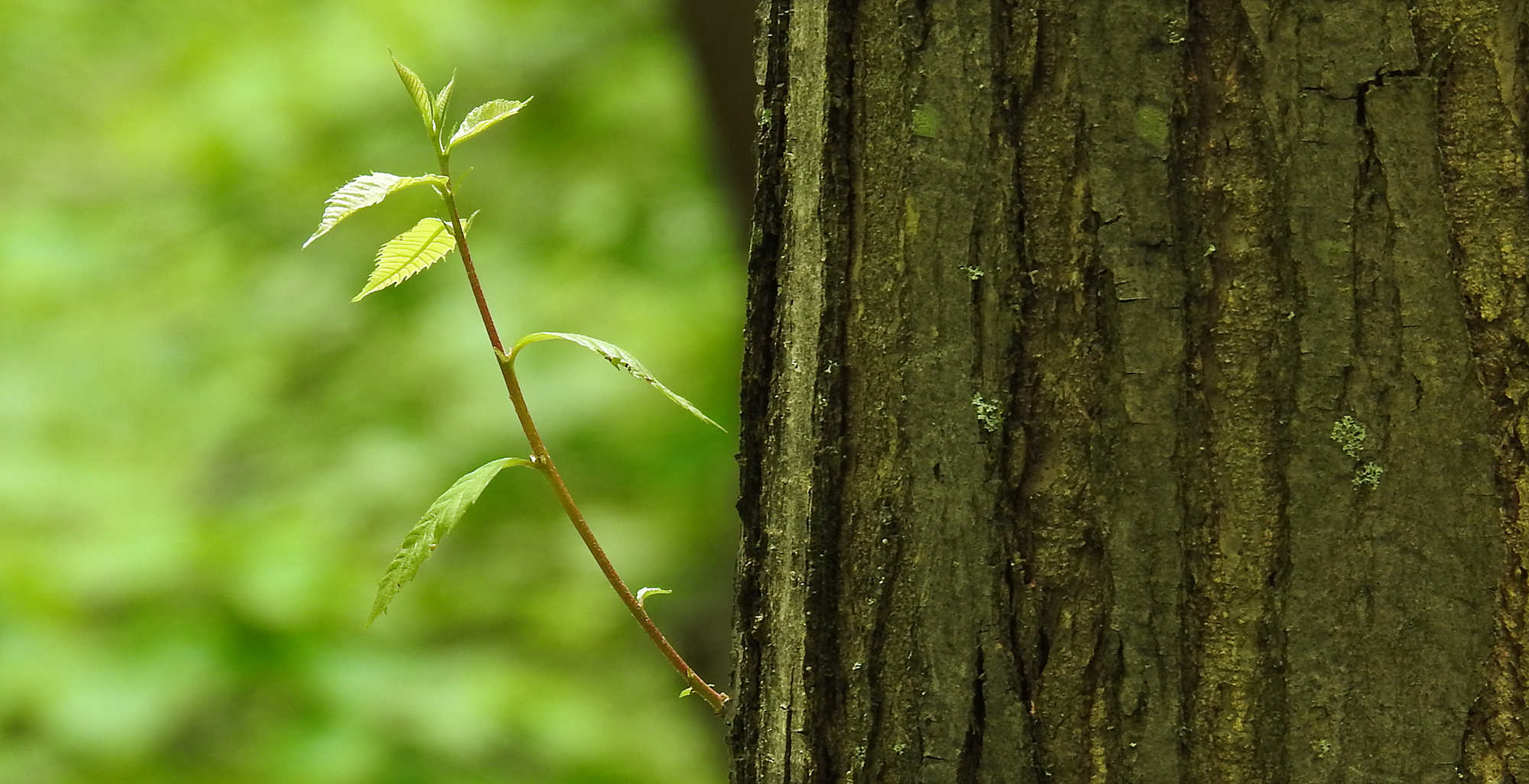
Every now and then, I’ll come across a decent-sized American chestnut and wonder: “Just how big did these trees get?”
I’ve always read that American chestnut (Castanea dentata) was a dominant tree throughout eastern North American forests. I’ve heard people describe American chestnut as a tree that towered above all others. I’ve even seen references to American chestnut as “the redwood of the east.”
But how much of this is true? Was American chestnut an exceptionally massive tree?
Unfortunately, it’s difficult for us to know for sure. A fungal disease known as chestnut blight killed nearly every large American chestnut throughout the first half of the 1900s. Today, American chestnut still exists on the landscape, but almost always as a smaller tree.
Ecologists in recent years have been wondering about the size of American chestnut in pre-blight forests. I’ve been wondering about it too, which is why I decided to film a video on the topic. It turns out that we may have some answers after all.
Has the size of American chestnut been exaggerated in recent decades? What do sources from the 1800s tell us?